5 days Mgoun trekking - Agouti -Ait Alla
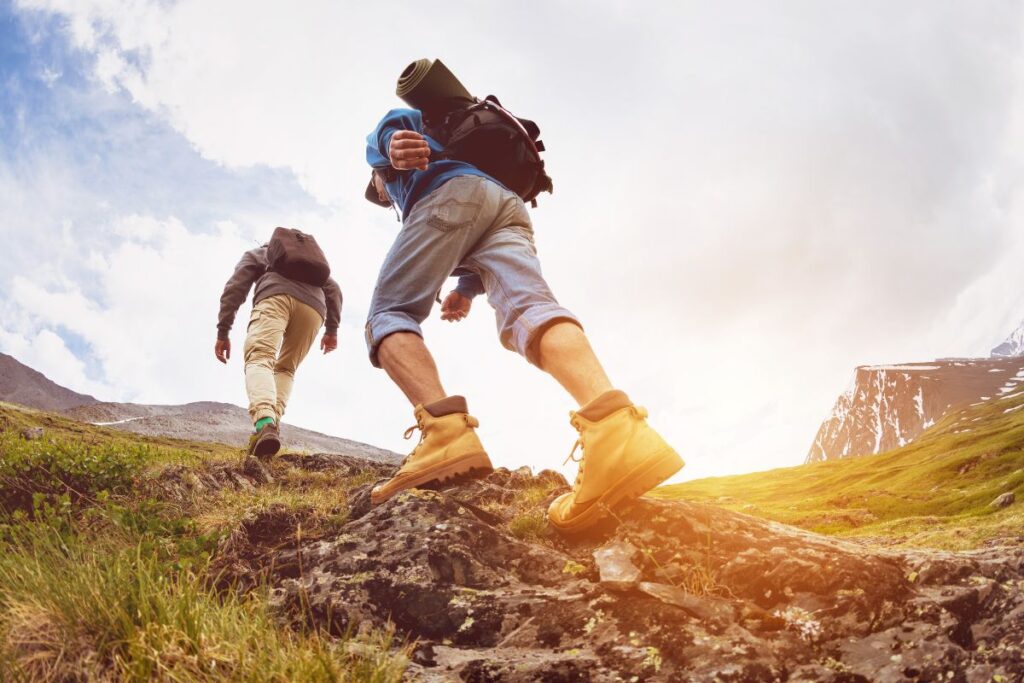
An adventurous trek in rural Morocco taking you into untouched regions of the Atlas Mountains for a real insight into the traditional mountain community culture and some great views on the way! Walking beyond the reach of vehicles, assisted by mules to carry the load, you envelop yourself in the real Morocco.
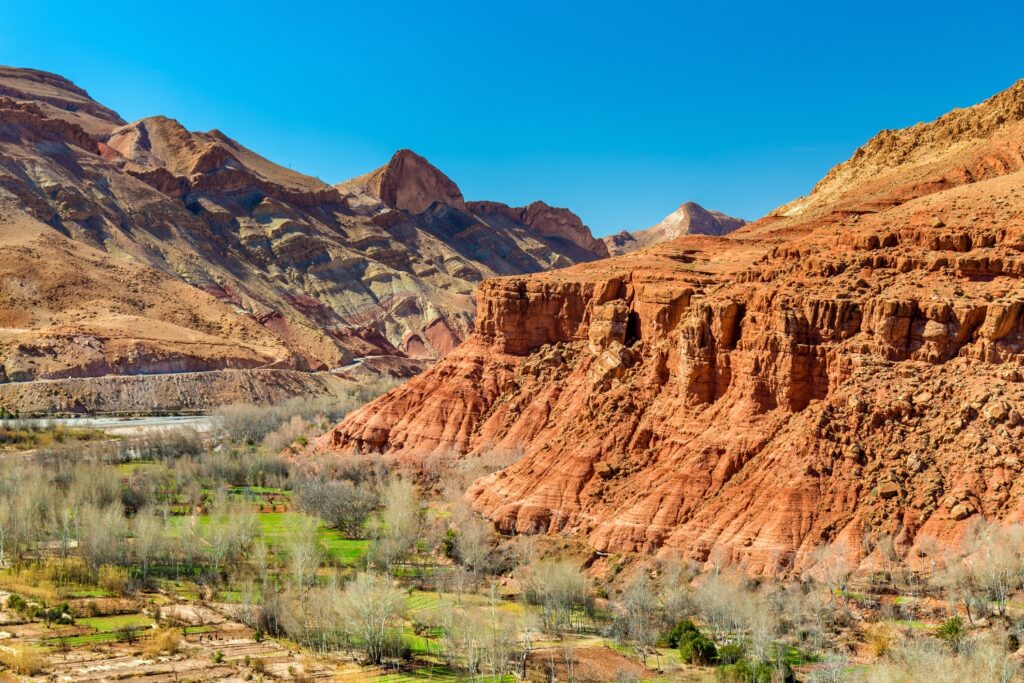
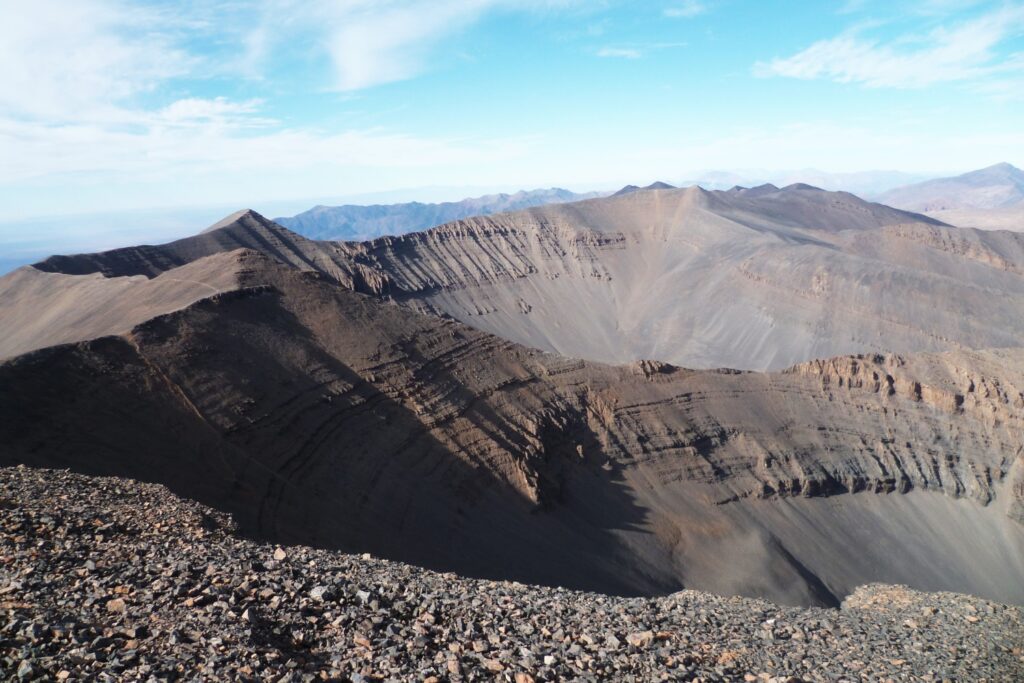
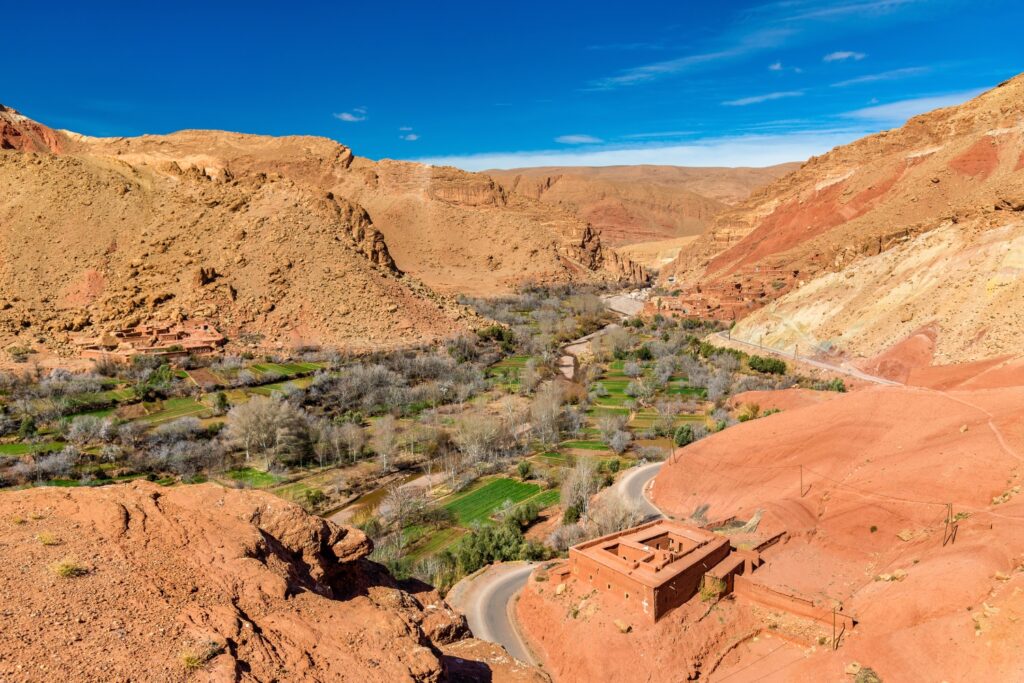
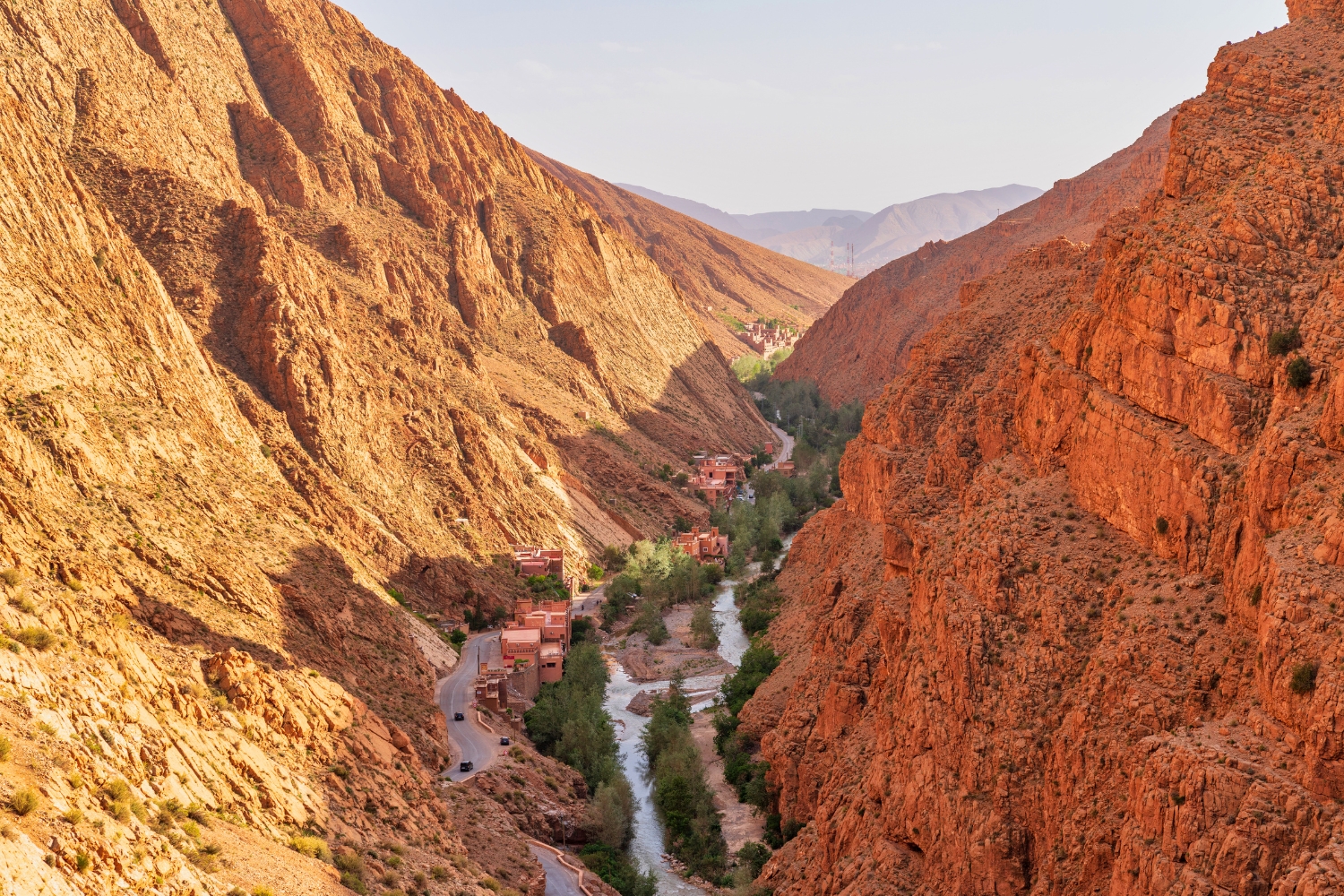
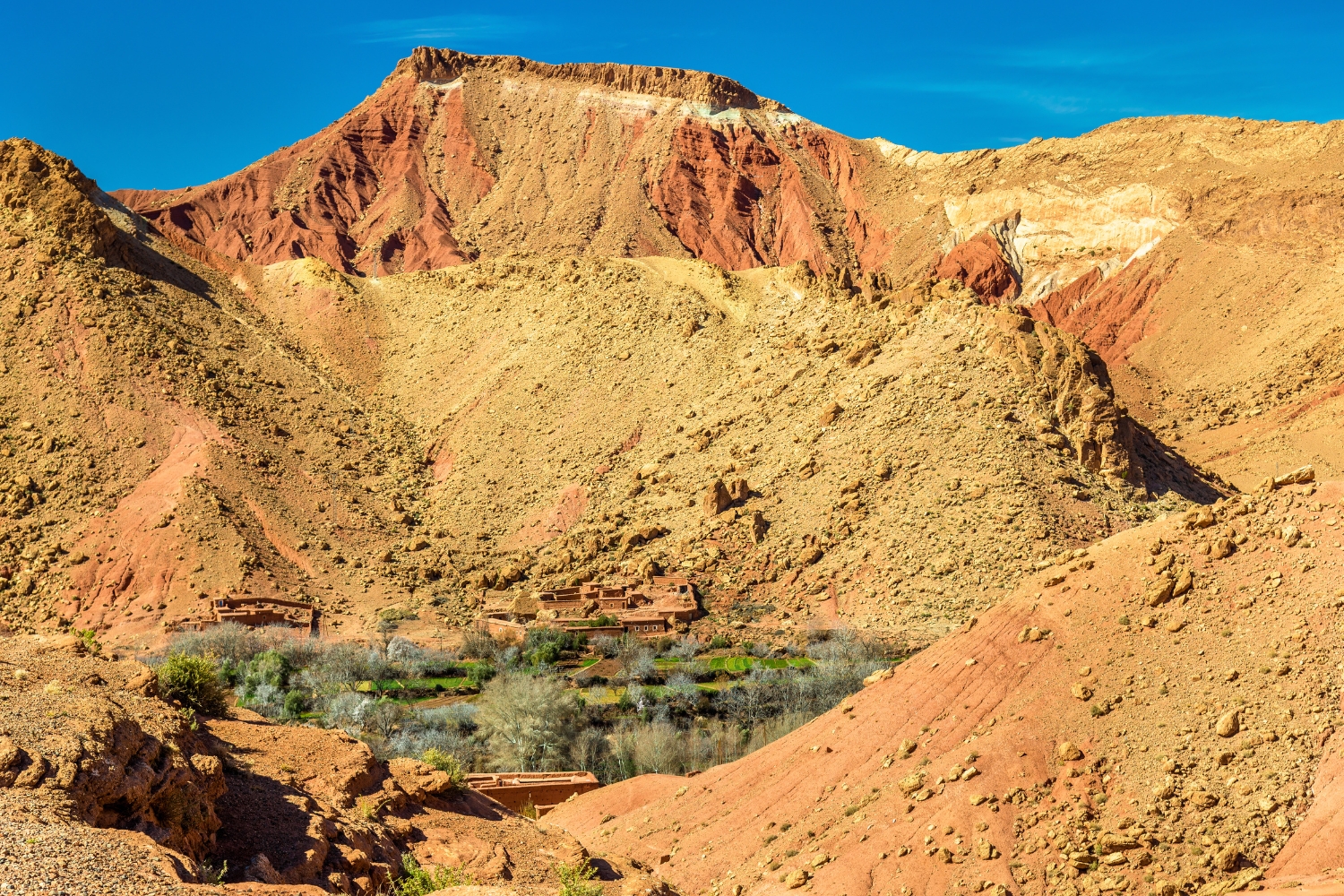
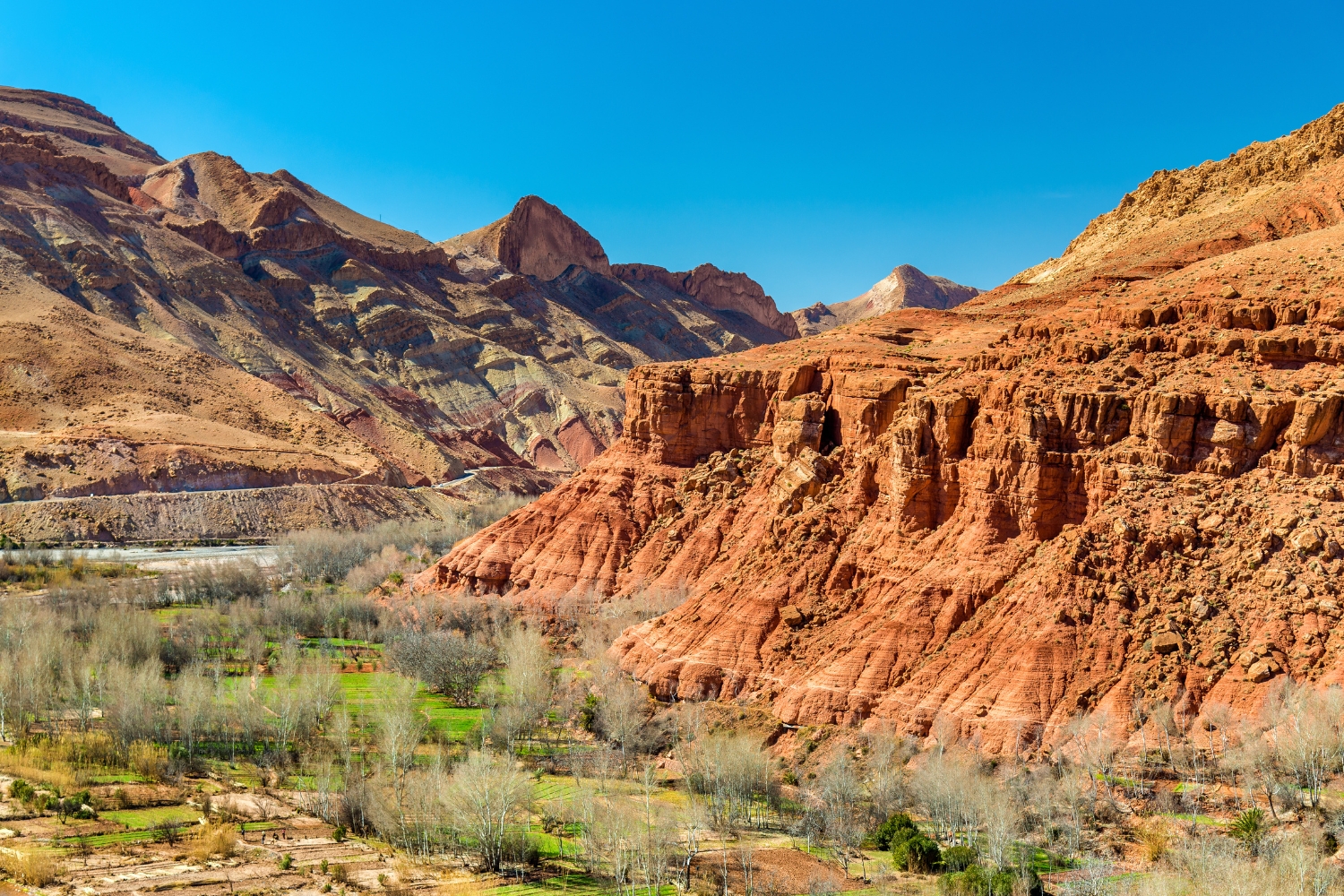
Beautiful Bougmez valley with impressive gorges and rocks formations. Your trekking culminates with the chance to climb Jebel Mgoun(4068m) for spectacular sweeping views across the Atlas before completing the circle by returning to the Bougmez valley . In complete contrast to the peace of the mountains.
Six to seven hours/17km/326m descent/ascent
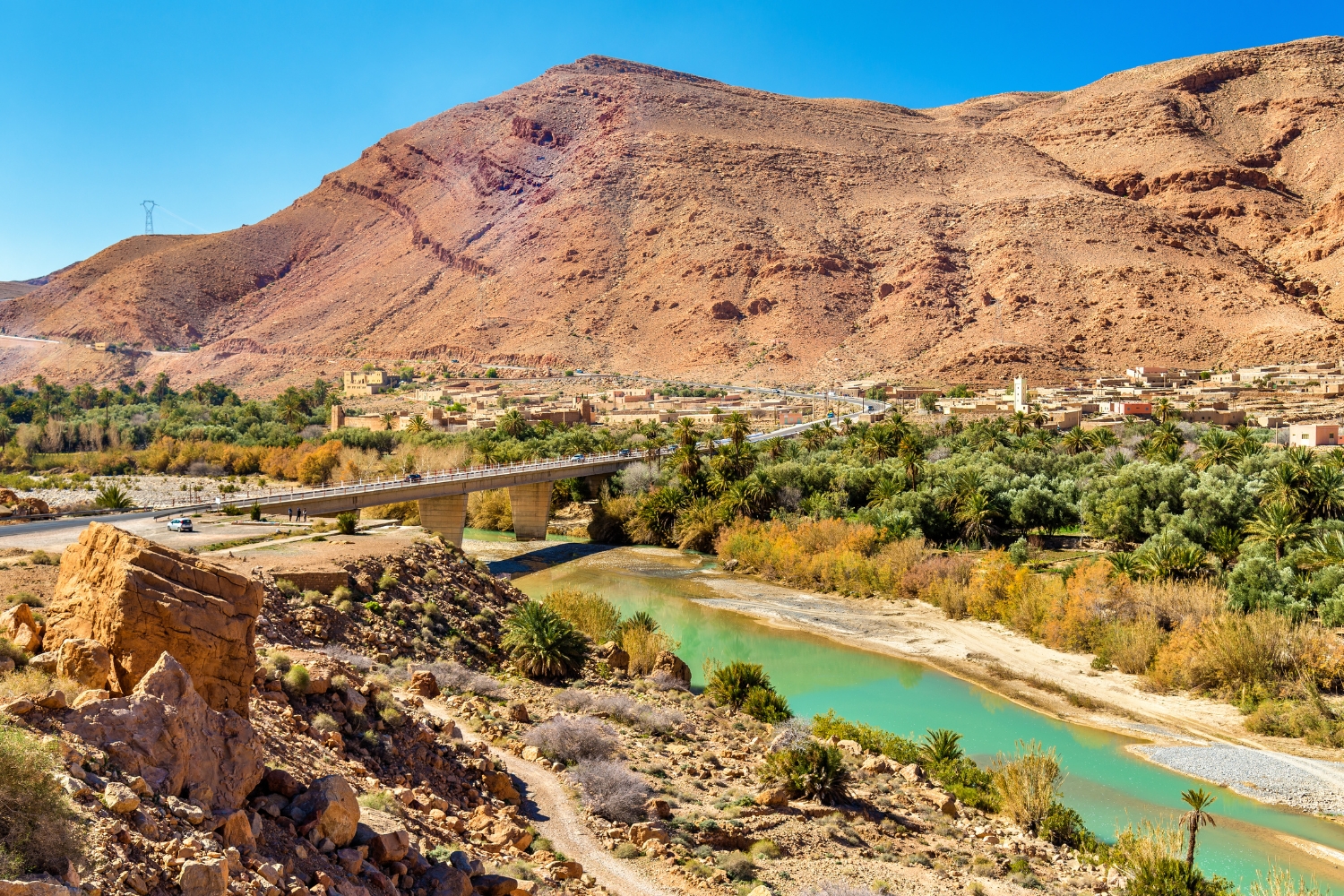
Agouti sits at the head of the Ait Bou Goumez Valley and the walk out of the village along the road has delightful views of the Happy Valley, the reasons for its name soon becoming obvious. After a leisurely hour and a half, a piste leads off left down from the road. A little further on there is a choice of following the piste or taking a steeper, shorter path that zigzags down into the valley, rejoining the piste at the village of Agerssif (1489m), which you should reach in under three hours from Agouti. Agerssif sits at the confluence of the Lakhdar and Bou Goumez Rivers, where there is a bridge. The river here is a good place to rest and a great spot to camp.
The Lakhdar Valley narrows considerably as the piste, wide enough to be used by vehicles, climbs its south side. A half an hour or so upstream is the picturesque village of Taghoulit (1519m), surrounded by juniper trees, and with a simple gite. The piste continues up the gorge and then out into the broadening and more fertile upper valley, until it reaches Sebt Ait Bou Wlli, (pronounced Ait Bouli) a sizeable village above the river, with a school (marked by flags), a Saturday market
Several valleys meet at this village: Jebel Rat heads straight up on another good walk past the village of Abachkou to Jebel Rat (3797m). Our piste heads left, south, the valley becoming ever more beautiful as it winds up above wheat and barley fields, juniper, wild fig and almond trees. The village of Tazouggart, on the opposite side of the valley, marks a more-than-halfway point between Sebt Ait Bou Wlli and the day’s end. From here, the landscape becomes ever more fantastic, with a hint of Shangri-la about it, until after two to 21\2 hours you reach Rougoult (1893m). There is excellent camping just below the village beside the Tifra River.
Six to seven hours/14km/600m descent/970m ascent
For two hours, the morning walk follows the Tifra, the stony path crisscrossing the river. There are terraces wherever there is space on the banks, although in places the valley is simply too narrow to cultivate. As it climbs, so the landscape becomes more barren. The mule path is well-trodden and although it occasionally is forced to climb above gorges, it does follow the course of the river, roughly due south.
The source of the Tifra, no more than a trickle at the best of times, sits just below the pass of Tizi n’Rougoult (2860m). At this point, even the juniper trees are below you and only alpine plants and bushes above. From the broad saddle beneath the pass, a path leads left (east) to a ridge that climbs to over 3500m. The Rougoult pass is well worn, straight ahead. From the pass, the summit of Ighil M’Goun – at 4068m just under 100m lower than Jebel Toubkal – is due east. Ahead of you there are long views across the southern M’Goun Massif and, more immediately, across the Tessaout River, a vast primordial scene that looks as though it has just been formed, the mountain slopes showing great gashes of rust, green and grey rocks.
From the Rougoult pass, the mule path is clearly marked, winding down in front of you and arriving after two hours at the first village, Tasgai walt. From here, keeping the river to your left, in all likeliness being followed by curious village children looking for entertainment, it is a gentle walk – 40 minutes, though you could easily spend longer – along the track to the village of Amezri (2250m) for the night.
6 hours/18km/427m descent/150m ascent
The third day is one of gentle pleasures as the path follows the Tessaout River, shelving gently from 2250m to 1833m. The valley is hemmed in by some impressive cliffs, particularly by the Ichbbakene escarpment, which rises a sheer 1000m above the river.
The river has little or no fish since a large flood flushed them out a few years back, but it does irrigate some exceptionally fertile farmland which the Berbers, here of the Ait Atta tribe, use to grow a range of seasonal crops. In the spring, the valleys are carpeted with wild flowers, while the fruit and nut trees add their blossom to the spectacle. In this part of its course, the Tessaout flows more or less due west and is fed by a series of smaller streams that bring melted snow off the higher mountains.
At several places along the day’s walk, the path crosses the river. For much of the year, it should be possible to hop over stones. But in spring, when the valley is at its most beautiful, the river may be too high and you may have to wade, as at the village of Imi n’Ikkis, some 5km from Amezri. The village is no more than a cluster of houses, but does have a shop (no sign) that usually stocks water and soft drinks, may also have the lurid green plastic shoes villagers wear to wade in the rivers, and occasionally has some tinned food.
As the path passes beneath the larger village of Ichbbakene, an hour and a half further downstream and backed by the sheer escarpment, you will see the significant building of the Hotel Edare. Built by a villager who worked in France, it was not operating at the time of our visit.
Two and a half hours further on, having crossed the river at several places, the path narrows and squeezes itself beneath the stone and mud houses of the village of Ait Hamza. At the bottom of the village is a working water mill. Powered by water diverted from the river, it’s used to grind the annual wheat crop. Another hour of delightful walking leads to the village of Ait Ali n’Ito.
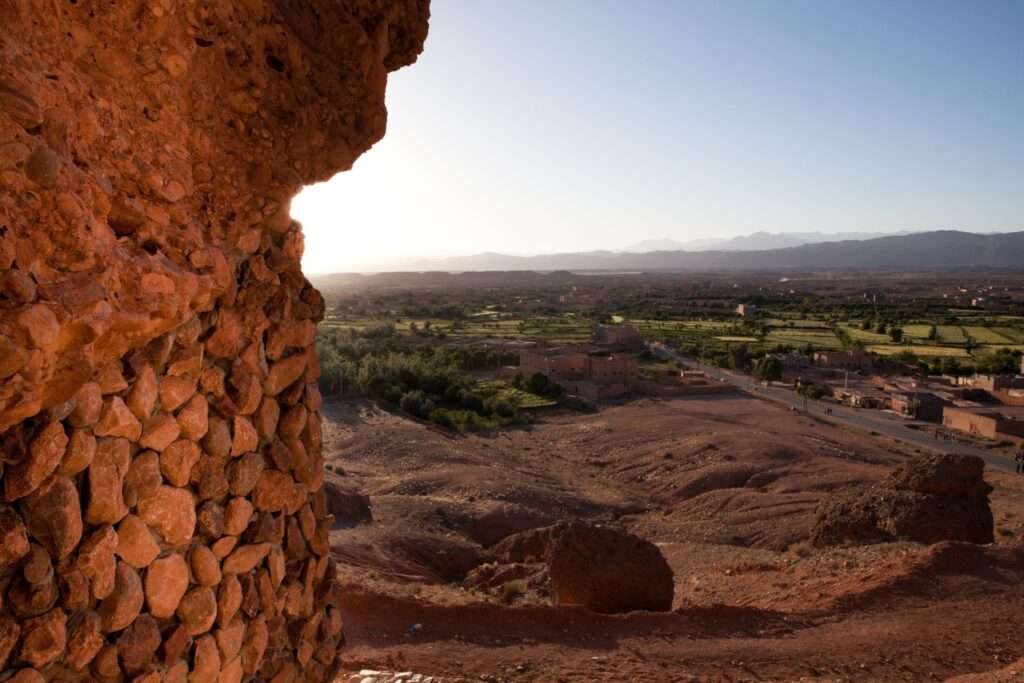
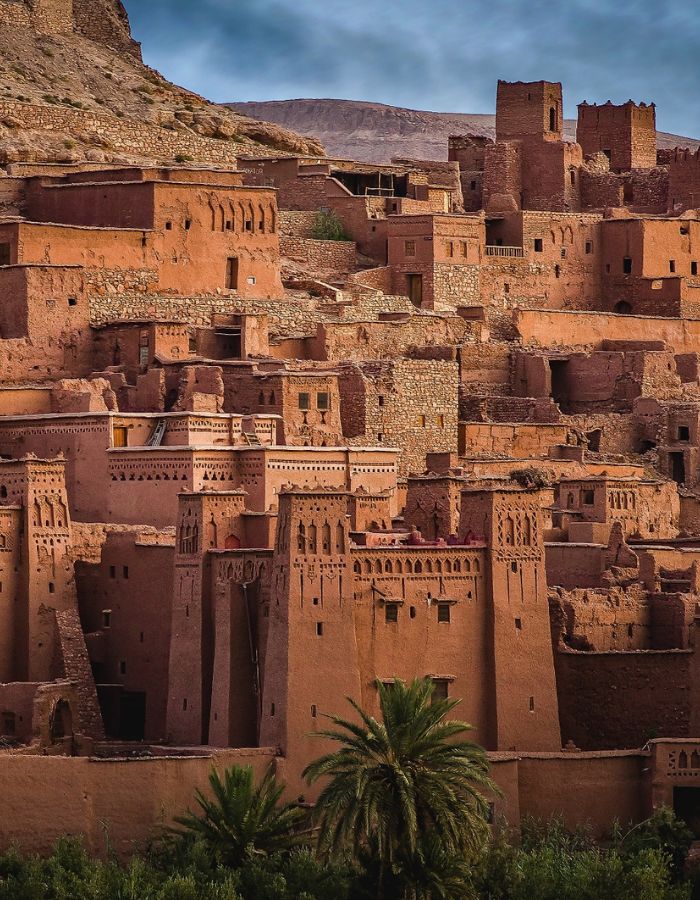
If you have time, there is a good side trip to the village of Magdaz, a three-hour round trip to the south of Ait Ali n’Ito, but well worth the effort as this is one of the most beautiful villages in the Atlas Mountains. Apart from the beauty of the place, check out the village’s extraordinary architecture, where tower-houses have been built in steps using stone and wood, a technique only known here, in Fakhour (see tomorrow’s walk), Yemen and Afghanistan.
21\2 to 3 hours/8km/150m descent
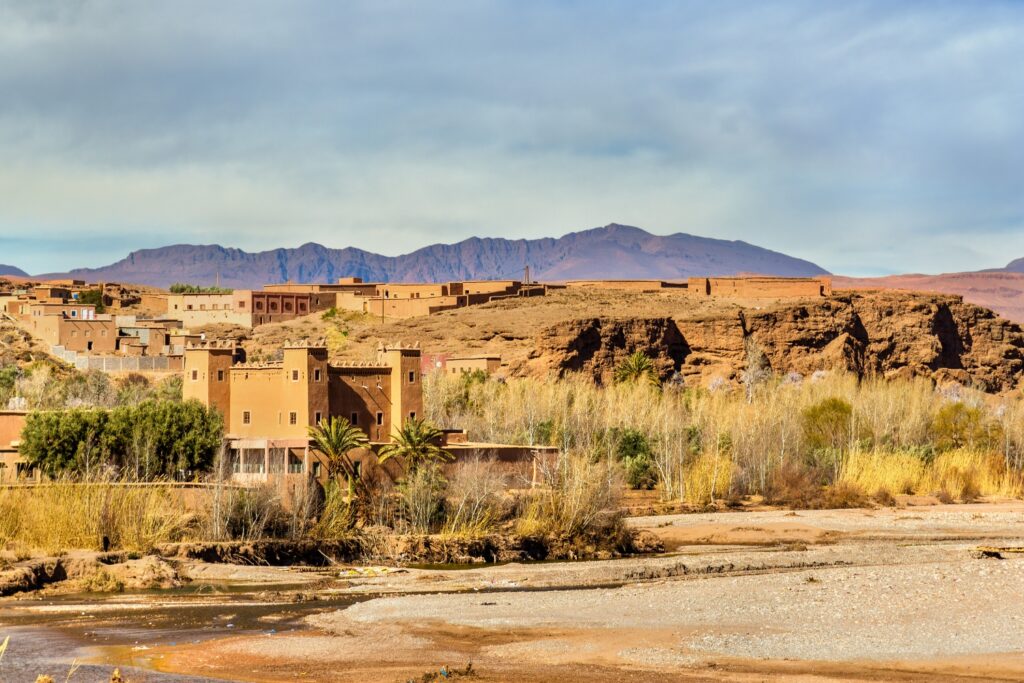
A dirt road leads alongside the river on a gentle walk down to the end of the trek. Occasionally the route does climb a little before it reaches the beautiful little village of Fakhour, where the houses climb up the hillside and noted for its agadir, which can be visited. There’s no entry fee, but the gardien should be tipped (Dh10 would be welcomed).
Less than an hour beyond Fakhour, the village of Ifoulou sits on a bend of the river and the road. This village seems to sleep for most of the week, there being little other than a drinks stand open, but on Monday it is the site for a large souq, when villagers from along the valleys come to trade and talk. Half an hour beyond the village, the piste joins the main Demnate-Skoura road by the new road bridge over the Tessaout River, below the village of Ai\”t Alla where we will find the transport waiting to get by the end of the day to marrakech via Ait tamlil , damenate.
please note that if you like to add another day so the trek can be extended to visit the village of Magdaz.
Our driver will pick you up from your hotel / Riad in Marrakech at the time agreed upon at the time of booking.
If you have any problems: please email us or call us on the numbers displayed on the contact banner.
Easy Reservations: Accepted until 6:00 PM the day before (Marrakech time), If you have any difficulty booking or need any other service, please contact us .